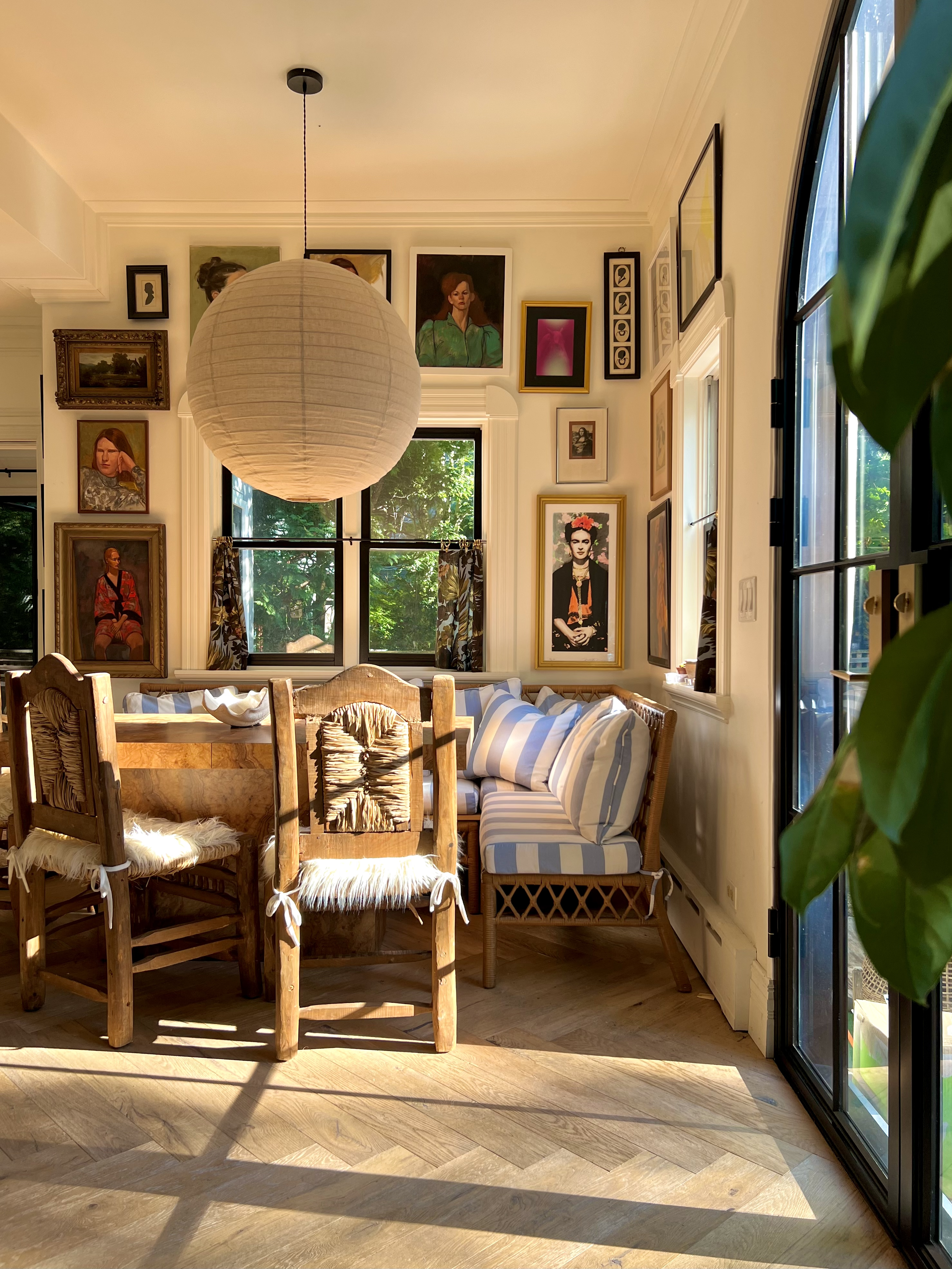
People have been asking me for YEARS to create a guide to gallery walls, so I am finally offering you some practical tips for creating gallery walls that will shine. Creating a gallery wall is a fun and creative way to showcase your personality and style in your space. In fact, I truly believe that gallery walls hold the ultimate power to add a more personalized touch to your interiors. Whether you’re an art enthusiast or a casual collector, finding affordable vintage art can transform your walls instantly and create lots of depth and interest throughout your space. Read below for tips on how to curate a collection that reflects your taste without breaking the bank.

Understanding the Basics of a Gallery Wall
A gallery wall is more than just a jumble of frames; it’s a curated collection that reflects your personality, interests, and experiences. Understanding the basics of a gallery wall can help you set the foundation for a design that feels cohesive and inviting. Start with picking a location that has enough visual impact, such as a prominent wall in your living room, hallway, or even above a console table. The goal is to create a focal point that draws the eyes and engages visitors, but also to create a visual story about your interests, travels and personal style.
Once you’ve designated the space, consider the scale of your wall and the size of the artwork you intend to use. Large pieces can set an anchor point in your design, while smaller works can fill in the gaps and create a layered effect. In fact, I would go so far as to say that the smaller pieces are JUST as important as the larger ones. When considering your selection, think about color, texture, and style – these elements play a crucial role in maintaining harmony and flow across the wall (but don’t over think this too much). Mixing different sizes, color and orientations of frames can also add visual intrigue and dimension to your gallery. I usually opt to have some kind of theme throughout (like in the images above, they are nearly all portraits, almost all gold frames of different styles, yet there are a few black frames and landscapes thrown in to create more interest).

Choosing a Theme for Your Gallery Wall
Choosing a theme for your gallery wall can streamline your selection process, making it easier to curate a collection that feels intentional and cohesive. A theme might be based on color palettes, subjects, or even styles. For example, if you love a beach vibe, consider choosing artworks that feature coastal landscapes or use a calming color scheme of blues and sandy shades, but be sure to avoid making it feel too “beachy” or too “coastal.” Throwing some dark, moody landscapes in with some abstracts would keep things interesting and sophisticated.
Another effective theme might be a personal story—perhaps pieces that represent your travels or milestones in your life. By displaying photographs, postcards, or art from your favorite places, your walls can become a visual diary. For added depth, don’t shy away from including artwork created by local artists or pieces that have sentimental value, such as gifts from friends or family. I always tell clients to not discount adding 3-D pieces to your gallery walls, or even textiles, mirrors and plates. Buy a tiny shelf to display a small sculpture, throw in a cool vintage scarf….it’s these unexpected elements that make the best gallery walls.
Consider storytelling through your theme, too; this can be a really effective way to convey your personal style and story through the design of your home. Placing an interesting array of pieces that all share a common thread will encourage thought, conversation, and will just be downright aesthetically interesting. In the end, the best theme is one that feels genuine to you, sparking joy and nostalgia every time you walk into the room.

Finding Affordable Vintage Art: Where to Look
When it comes to collecting affordable vintage art, the thrill of the hunt can be as exhilarating as the finished gallery wall itself. One of the best places to start is local thrift stores. Many thrift shops sell unique pieces that simply need a little love to shine again. Spend some time browsing through the aisles; you never know when you might stumble upon a hidden gem that perfectly matches your aesthetic. Don’t discount piece in ugly frames, or ugly pieces in beautiful frames – both can be rejiggered to look ace on that wall. I also always keep my eye out for canvases that I can paint over to create my own abstractions (something I promise, everyone can do and even have fun doing it!).
Estate sales are another fantastic source for vintage art. Often, families are looking to clear out beloved collections that hold special memories, and you can find incredible art at reasonable prices. I’ve even been to many, many estate sales of artists and art collectors, and so many of my personal art collection has been acquired by these sales. EstateSales.org is my favorite estate sale resource, which lists sales nationwide and even shows preview pictures and explanations so you can see if the sale is worth your time. Make sure to arrive early to get the best picks, and don’t hesitate to negotiate for a better deal. You can also check Facebook Marketplace, where people often sell art pieces they no longer want. This option allows you to shop form the comfort of your home and filter searches by location and price.
Don’t forget about online marketplaces and auctions, too—these avenues can provide access to a vast array of artists and styles. Websites like Etsy can offer vintage pieces that are both affordable and unique. Another option is estate auction sites, like Rivich, AuctionNinja and more, where you may find original works from lesser-known artists at surprisingly low prices. Overall, taking time to research and explore these different platforms will reward your efforts with a collection that embodies your style while remaining budget-friendly. While I love certain types of limited edition prints, like block prints and lithographs, I tend to stay away from prints of original paintings. These tend to look cheap and often don’t even save you much money. I promise, it IS possible to acquire original art at very low prices, it just takes some time and effort, but it WILL be worth it!
The last tip I want to leave you with in this section is that not all gallery walls need to be large. I have so many tiny gallery walls that I can expand on (if I choose to), and these are some of my favorite arrangements in my home.

Mixing Styles and Frames for a Unique Look
Mixing styles and frames is an art in itself and can bring a whole new level of interest to your gallery wall. When done thoughtfully, this can create a visually dynamic display that creates lots of depth and interest. To start, pick a unifying element, like color or material, to maintain cohesion amid the variety. For example, using gold frames can tie together disparate art styles, adding a touch of elegance without overwhelming the space. But, as mentioned above, don’t be afraid to throw in a few pieces to break up the monotony of the frame colors. I often use a similar formula for using color throughout a room, and it’s called the 60%-30%-10% (use 60% one color, 30% a complementary color, and 10% a fun splash of a third, more unexpected color).
Also, don’t be afraid to combine vintage and modern pieces! This contrast can deliver an unexpected juxtaposition that really draws the eye in and makes the entire ensemble captivating. A modern abstract painting can play beautifully against a classic landscape print, providing depth to your collection. Remember, maintaining a balance is essential; pairing too many differing styles can lead to a chaotic look instead of an inviting one, so try to keep the number of styles used throughout the wall to a minimum.
Ultimately, play with sizes and orientations while rearranging pieces to find the perfect fit. You might discover that a combination of portrait and landscape orientations, in various sizes—from large standout works to small accent pieces—can create an aesthetic that feels both curated and collected. Experimenting will not only help in achieving a unique look but also keep the entire process fun an interesting. Always remember, too, that a gallery wall never needs to be “done” and it certainly doesn’t need to have all the pieces for it before you hang it. I always start my walls and add to them as I acquire pieces, which also helps me enjoy the gallery wall longer and keeps me excited about it/keeps things fresh.
Arranging Your Gallery Wall: Tips and Tricks
Arranging your gallery wall is where the magic truly happens, and it’s essential to approach it with a balance of intention and creativity. One popular method is to lay the pieces out on the floor first before committing to the wall. This technique allows you to see how sizes and colors work together and gives you the freedom to rearrange until everything feels just right. Play with spacing—consider leaving 2 to 3 inches between frames to create a more open feel, but don’t measure this precisely. If you have different shapes, items and sizes on your gallery wall (which I recommend, you should), then exact measurements will prove impossible anyway. Your eyeball is best, just try to get “equal-ish” space between pieces.
It may help to start with larger art pieces as anchors and build your layout around them. This offers a framework to guide the rest of your arrangement. For instance, a significant piece might go in the center, with smaller artwork surrounding it to create a cascading effect. Additionally, incorporating unexpected elements such as mirrors or decorative objects can enhance your gallery wall, creating visual layers and depth. Personally, I like my largest scale piece to be a bit off-center, but I think you get the idea about building the gallery wall around that largest piece.
Lastly, trust your instincts! Your gallery wall should ultimately represent your style and evoke joy. Don’t be afraid to switch pieces out or rearrange as your collection grows. Art should inspire you, and an arrangement that once felt perfect can shift as your preferences change over time. With every tweak of the arrangement, you will ideally feel refreshed, and your space will feel truly personalized.
Caring for Your Vintage Art Collection
Caring for your vintage art collection is crucial to ensure its longevity and keep it looking its best. Proper maintenance can prevent damage from environmental factors, allowing your pieces to be enjoyed for years to come. Start by considering the placement of your artwork; avoid hanging pieces in direct sunlight, as it can fade colors and cause deterioration over time. Consider using UV-protective glass for frames to shield your art from harmful rays.
Dusting regularly is an easy yet essential part of caring for your collection. Dust can accumulate and settle on surfaces, dulling the overall appearance. A gentle microfiber cloth can effectively remove dust without damaging the artwork. If you have pieces that require more thorough cleaning, make sure to follow the instructions suitable for each medium, as different materials demand specific care. I am certainly guilty of not dusting my gallery walls enough, but when I do, they really do shine.
Lastly, handle your artworks with care when moving or rearranging them. Store unused pieces in a climate-controlled environment, away from extreme temperatures, humidity, and pests. I keep most of my unused pieces in my climate-controlled attic and NOT my basement, which is prone to temperature fluctuations, humidity and flooding.
With a little creativity and some smart shopping, you can successfully create a beautiful gallery wall that adds character to your home. Remember, the goal is to enjoy the process of collecting and decorating. Each piece you choose tells a story, so embrace your style and let your gallery wall be a reflection of YOU.

